Tuesday, May 2, 2023

In The WEE SMALL HOURS


The WEE SMALL HOURS


FRANK SINATRA

The WEE SMALL HOURS


NONNA BELLINO'S COOKBOOK

aka The SINATRA COOKBOOK

LERCARA FRIDDI - SICILY


FRANK MARTY DOLLY & DANNY


Frank Sinatra's father was born and raised in the town of Lercara Friddi, Sicily, about 45 minutes south of the Sicilian capital of Palermo. Frank's father Saverio Martino Sinatra immigrated to New York City with his mother in 1903. His father FRancesco Sinatra was already living there and working in a pencil factory. 

Frank Sinatra's mother Dortea (Dolly) Gravante was born in Lumarzo, Italy, a small town near Genoa. She was born the day after Christmas, December 1897. Her family immigrated to America when she was just and infant. 

Dolly and Marty Senatra met and married in 1913. There only child Frank Sinatra was born December 12, 1915. The rest is history.

Of Frank Sinatra's two parents Dolly and Martino, they both cooked, but Marty was the better cook of the two, and often cooked dinner for his wife and child, and himself. Martino learned to cook from his mother and aunts who were all Sicilian, and Martino cooked most Sicilian dishes like, Caponata, Pasta con Sarde, and Baked Ziti with Meatballs.

Italian-American author Daniel Bellino Z's maternal grandparents, Giuseppina Salemi and Fillipo Bellino were both born in Lercara Friddi, Sicily, the same town that Frank Sinatra's father comes from. The women in Danie's family were wonderful cooks, including Daniel's Aunt Fran, Wanda, and Aunt Helen, an his mother's mother Giuseppina, the woman named in his cookbook 
Granma Bellino's Italian Cookbook, "Recipes from My Sicilian Nonna" This cookbook is the closest we get to a Frank Sinatra Cookbook, and so some people have refered to it 


To Cook and Eat like Frank Sinatra, Grandma Bellino's Italian Cookbook is the closest cookbook that comes clost to the recipes of dishes that Frank Sinatra ate, growing up in Hoboken, New Jersey. It's available on Amazon.com ...


Monday, May 1, 2023

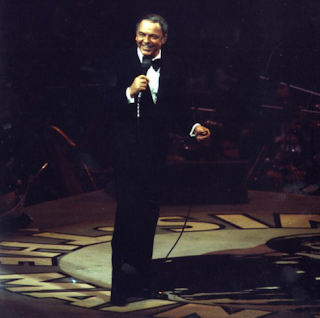
Frank Sinatra - You And Me


Frank Sinatra

LIVE


Frank Sinatra


YOU & ME  "We Wanted it All"

From the TRILOGY Album 

1980


FRANK SINATRA


"YOU & ME"

LIVE


SUNDAY SAUCE

alla SINATRA

RECIPES


Monday, March 20, 2023

Frank Sinatra had a Cold by Gay Talese for Esquire


"FRANK"


  It was the Winter of 1965. Gay Talese arrived in Los Angeles to write an article on Frank Sinatra. Talese was on assignment from Esquire Magazine, one of the “It” magazines of the day. Sinatra was approaching 50, and Esquire, along with numerous others, wanted to do a piece on the great one, the legendary Frank Sinatra. There was just one problem, Frank Sinatra had a Cold. Yesm the man was under the weather as they say, and refused to do the previously agreed upon interview for the piece that Talese would write. Like Sinatra, Talese was an Italian-American from New Jersey, and one of the top writers of the day, to Sinatra’s iconic status as not only a great singer, actor, and live showman, Sinatra was on his way to becoming the century’s greatest entertainer. 

   Unable to get an in person interview, Talese resorted to talking to as many people as he could, who were close to the man, in the forms of; friends, family, associates, workers, and the multitude of flunkies and hangers-on of the Sinatara. Talese also observed Sinatra when and wherever he could.

   Talese gathered all the info he could, and wrote the article. He titled it “Frank Sinatra Has a Cold.” Esquire published the article in the April 1966 issue of Esquire Magazine, and the rest is magazine and writing history. Gay Talese’s piece on Sinatra, Frank Sinatra Has a Cold, was and still is highly exalted, and is considered one of the greatest articles ever written, if not still the greatest. 

   Yes, “Frank Sinatra Has a Cold” is considered the pinnacle of what has been deemed New Journalism, and was a feat of epic proportions of immersive reporting of a non-participating subject (Sinatra). Gay Talese turned a very difficult assignment into journalistic gold.

   In the article, Sinatra, the man who led The Rat Pack of Dean Martin, Sammy Davis Jr., and himself as the undisputed ring leader, Sinatra was The King of Las Vegas, a movie star and one of America’s greatest recording artists.

Talese describes Sinatra as a sublime singer, and a man of two distinct types, the masculine Jet-Set Swinger, and ancient Sicilian Padrone ( Boss ), and a man who commanded respect, settled scores, solved problems, and a man who righted wrongs. Talese wrote, “Sinatra with a cold is like Picasso without paint, and a Ferrari without fuel, only worst.”

   Talese writes, Foe Frank Sinatra was now involved with many things involving many people - his own film company, his record company, his private airline, missile-parts frim, his real-estate holdings across the nation, his personal staff of seventy-five people - which are only a portion of the power he is and has come to represent. He seemed now to be also the embodiment of the fully emancipated male, perhaps the only one in America, the man who can do anything he wants, anything, can do it because he has money, the energy, and no apparent guilt. In an age when the very young seem to be taking over, protesting and picketing and demanding change, Frank Sinatra survives as a national phenomenon, one of the few prewar products to withstand the test of time. He is the Champ who made the big comeback, the man who had everything, lost it,then got it back, letting nothing stand in his way, doing what few men can do: he uprooted his life, left his family, broke with everything that was familiar, learning in the process that one way to hold a woman is not to hold her. Now he has the affection of Nancy amd Ava and Mia, the fine female produce of three generations, and still has the adoration of his children, the freedom of a bachelor, he does not feel old, he makes old men feel young, makes them think that if Frank Sinatra can do it, it can be done; not that they could do it, but it is still nice for other men to know, at fifty, that it can be done.” - Gay Talese - Esquire Magazine 1966 -

  Wow! That says quite a lot. Yes, but the man (Frank Sinatra) and the myth, it’s all true, and so beautifully told by Gay Talese, and we love it. That is Sinatra in just so many words, “A Man’s Man,” Cool, suave, confident, powerful, talented, “One of a Kind,” there was only one Sinatra, never another quite like Frank, at this and that point in time (1966 to 2023), and as many have saide, “There will never be another Sinatra.”


Agreed?


... DBZ ...


NYC ... 2023


The RAT PACK


Frank with Daughter Nancy

And Yule Brenner


Frank signals "A OK" !!!

With Ed Sullivan and Friends


SUNDAY SAUCE

aka The SINATRA COOKBOOK

SINATRA SUNDAY SAUCE Recipe

AND MORE !


Wednesday, December 28, 2022

Tuesday, December 20, 2022

Frank Sinatra Christmas


CHRISTMAS at The SINATRA'S

Nancy, Frank & Tina


Let’s face it: Christmas simply wouldn’t be Christmas without Frank Sinatra. The words “Sinatra” and “Christmas” are inextricably intertwined in western culture. In fact, Christmas doesn’t really seem like Christmas until you’ve heard Sinatra’s warm baritone singing “Silent Night” or “Have Yourself A Merry Little Christmas,” either on the radio, in a restaurant, a shopping mall, or at home on the stereo. There are plenty of Frank Sinatra Christmas recordings, and hearing his voice helps to conjure the spirit of the approaching holiday season. When you hear Ol’ Blue Eyes wrap his voice around “The First Noel” you know that the holidays are well and truly on their way.

So where does Sinatra’s association with Christmas come from? Well, it goes right back to 1948, the year the LP format was introduced by Sinatra’s then record label, Columbia. That was when the 32-year-old man who would come to be known as The Chairman Of The Board released Christmas Songs By Sinatra, the first Frank Sinatra Christmas album, arranged by the redoubtable Axel Stordahl. It contained eight traditional holiday songs, beginning with “White Christmas” (a song he first recorded in 1944 as a single), alongside carols such as “O Little Town Of Bethlehem” – apparently one of Sinatra’s favorites – and culminating with “Santa Claus Is Coming To Town.”


A Jolly Christmas With Frank Sinatra

By 1957, Sinatra was once again in the mood to celebrate and released his second festive LP, A Jolly Christmas With Frank Sinatra, which found him revisiting some of the songs from his first Yuletide album as well as recording new material in the company of arranger Gordon Jenkins. What’s striking about that album is Sinatra’s version of “Have Yourself A Merry Little Christmas,” a song written by Ralph Blaine and Hugh Martin, and originally sung by Judy Garland in the 1947 movie Meet Me In St Louis.

Evidently, Sinatra felt the original lyrics were too downbeat. In 2007, a 93-year-old Hugh Martin recalled that, back in 1957, prior to recording the song for the second time, Sinatra called the lyricist to ask “if I would rewrite the ‘muddle through somehow’ line.” The songwriter remembered that Sinatra told him: “The name of my album is A Jolly Christmas. Do you think you could jolly up that line for me?” Martin agreed and made several revisions, the major one being the removal of the line “Until then we’ll have to muddle through somehow,” replacing it with “Hang a shining star upon the highest bough.” The alteration completely lifted the mood of the song, transforming it from a lugubrious meditation into a quietly uplifting song of hope. Sinatra recorded the new version and helped to transform a largely-ignored movie tune into a bona fide standard that a raft of singers have since covered.

Evidently, Sinatra felt the original lyrics were too downbeat. In 2007, a 93-year-old Hugh Martin recalled that, back in 1957, prior to recording the song for the second time, Sinatra called the lyricist to ask “if I would rewrite the ‘muddle through somehow’ line.” The songwriter remembered that Sinatra told him: “The name of my album is A Jolly Christmas. Do you think you could jolly up that line for me?” Martin agreed and made several revisions, the major one being the removal of the line “Until then we’ll have to muddle through somehow,” replacing it with “Hang a shining star upon the highest bough.” The alteration completely lifted the mood of the song, transforming it from a lugubrious meditation into a quietly uplifting song of hope. Sinatra recorded the new version and helped to transform a largely-ignored movie tune into a bona fide standard that a raft of singers have since covered.

What Frank Sinatra thought of Christmas

Since his death, in 1998, there have been countless compilations dedicated to Sinatra’s seasonal material. The most significant of them is Frank Sinatra Christmas Collection, which came out in 2004 and cherry-picked key cuts from his Reprise era. What distinguished it from other Frank Sinatra Christmas albums was the inclusion of previously unreleased material, including a duet with Bing Crosby and a rendition of “Silent Night” which Sinatra had recorded in 1991 at the age of 75. It marked the final time Ol’ Blue Eyes recorded a Christmas carol.

We know that Sinatra liked to record Yuletide songs but what was his take on Christmas? According to his daughter, Nancy, in an interview with Variety magazine, her father loved the holiday season. “Nobody embraced Christmas as he did,” she remembered. That’s not surprising, given the warmth and sincerity that shines through his many recordings of Yuletide songs.


Christmas, then, wouldn’t be the same without Frank Sinatra. For many, he’s the only singer who can bring the holidays vividly to life. It’s he, alone, who can make the tinsel glitter and the snow glisten, warming our hearts with a profound sense of bonhomie and goodwill to all. And, of course, aside from being a time of both religious observance and exchanging gifts, Christmas is also a time of celebration – and no one could celebrate quite like Sinatra.

It's not outrageous to contend that Frank Sinatra is the voice of Christmas. He is to the holiday season what snow is to winter: an essential component of the whole experience. His Yuletide songs provide an essential soundtrack that is mellow and reflective, yet also bright and mirthful, conjuring up the “happy golden days of yore” he sang of in his 1957 recording of “The Christmas Song.”

Frank Sinatra, then, is the perennial Christmas No. 1. He’ll be at the top of the tree for some time to come.


CAPRI

"Forget Me Not"
Parfum

CARTHUSIA - CAPRI


Thursday, December 8, 2022

SINATRA CHRISTMAS


The DEAN MARTIN SHOW

HAVE a MERRY LITTLE CHRISTMAS


MERRY CHRISTMAS

FRANK SINATRA

DEAN MARTIN

DEAN'S DAUGHTER GAIL 

And NANCY SINATRA

The DEAN MARTIN SHOW

CHRISTMAS SPECIAL

1967


SUNDAY SAUCE

alla SINATRA

alla BELLINO alla PACINO