Wednesday, February 23, 2022

Sinatra is Sicilian


"FRANKIE"

Francis Albert Sinatra


A Family from Sicily


Io sono Siciliano . . .” I am Sicilian.


At the age of seventy-one, in the broiling heat of summer in 1987, Frank Sinatra was singing, not so well by that time, in the land of his fathers. “I want to say,” he told a rapt audience at Palermo’s Favorita Stadium, “that I love you dearly for coming tonight. I haven’t been in Italy for a long time—I’m so thrilled. I’m very happy.”

The crowd roared approval, especially when he said he was Sicilian, that his father was born in Sicily. Sinatra’s voice cracked a little as he spoke, and he looked more reflective than happy. At another concert, in the northern Italian city of Genoa, he had a joke for his audience. “Two very important and wonderful people came from Genoa,” he quipped. “One . . . Uno: Christopher Columbus. Due: mia Mamma . . .”

This second crowd cheered, too, though a little less enthusiastically when he mentioned that his father was Sicilian. “I don’t think,” he said wryly, “that they’re too thrilled about Sicilia.” It was a nod to northern Italians’ feelings about the island off the southernmost tip of the country. They look down on its people as backward and slothful, and because, as all the world knows, it is synonymous with organized crime. It is the island of fire and paradox, the dismembered foot of the leg of Italy. Sicily: at ten thousand square miles the largest island in the Mediterranean, a cornucopia of history that remains more remote and mysterious than anywhere in Europe.

The island’s story has been a saga of violence. Its ground heaved to earthquakes, and its volcanoes spat fire and lava, long before Christ. Its population carries the genes of Greeks and Romans, of Germanic Vandals and Arabs, of Normans and Spaniards, all of them invaders who wrote Sicily’s history in blood.

“Sicily is ungovernable,” Luigi Barzini wrote. “The inhabitants long ago learned to distrust and neutralize all written laws.” Crime was endemic, so alarmingly so that a hundred years ago the island’s crime rate was said to be the worst in Europe. By then, the outside world had already heard the spectral name that has become inseparable from that of the island—Mafia.

The origin of that word is as much a mystery as the criminal brotherhood itself, but in Sicily “mafia” has one meaning and “Mafia”—with an upper case “M”—another. For the islanders, in Barzini’s view, the word “mafia” was originally used to refer to “a state of mind, a philosophy of life, a concept of society, a moral code.” At its heart is marriage and the family, with strict parameters. Marriage is for life, divorce unacceptable and impossible.

A man with possessions or special skills was deemed to have authority, and known as a padrone. In “mafia” with a small “m,” those who lived by the code and wielded power in the community were uomini rispettati, men of respect. They were supposed to behave chivalrously, to be good family men, and their word was their bond. They set an example, and they expected to be obeyed.

The corruption of the code and the descent to criminality was rapid. Well before the dawn of the twentieth century, the Mafia with a capital “M,” though never exactly an organization, was levying tribute from farmers, controlling the minimal water supply, the builders and the businessmen, fixing prices and contracts.

Cooperation was enforced brutally. Those who spoke out in protest were killed, whatever their station in life. The Mafia made a mockery of the state, rigging elections, corrupting the politicians it favored, and terrorizing opponents. From 1860 to 1924, not a single politician from Sicily was elected to the Italian parliament without Mafia approval. The island and its people, as one early visitor wrote, were “not a dish for the timid.”

Frank Sinatra’s paternal grandfather grew up in Sicily in the years that followed the end of foreign rule, a time of social and political mayhem. His childhood and early adult years coincided with the collapse of civil authority, brutally suppressed uprisings, and the rise of the Mafia to fill the power vacuum.

Beyond that, very little has been known about the Sinatra family’s background in Sicily. The grandfather’s obituary, which appeared in the New York Times because of his famous grandson, merely had him born “in Italy” in 1884 (though his American death certificate indicates he was born much earlier, in 1866). Twice, in 1964 and in 1987, Frank Sinatra told audiences that his family had come from Catania, about as far east as one can go in Sicily. Yet he told one of his musicians, principal violist Ann Barak, that they came from Agrigento on the southwestern side of the island. His daughter Nancy, who consulted her father extensively while working on her two books about his life, wrote that her great-grandfather had been “born and brought up” in Agrigento. His name, according to her, was John.

In fact he came from neither Catania nor Agrigento, was born earlier than either of the dates previously reported, and his true name was Francesco—in the American rendering, Frank.

Sicilian baptismal and marriage records, United States immigration and census data, and interviews with surviving grandchildren establish that Francesco Sinatra was born in 1857 in the town of Lercara Friddi, in the hills of northwest Sicily. It had about ten thousand inhabitants and it was a place of some importance, referred to by some as piccolo Palermo, little Palermo.

The reason was sulfur, an essential commodity in the paper and pharmaceutical industries, in which Sicily was rich and Lercara especially so. Foreign companies reaped the profits, however, and most locals languished in poverty. The town was located, in the words of a prominent Italian editor, in “the core territory of the Mafia.” The town lies fifteen miles from Corleone, a name made famous by The Godfather and in real life a community credited with breeding more future American mafiosi than any other place in Sicily. It is just twelve miles from the Mafia stronghold of Prizzi—as in Prizzi’s Honor, the Richard Condon novel about the mob and the film based on it that starred Jack  Nicholson.

It was Lercara Friddi, however, that produced the most notorious mafioso of the twentieth century. Francesco Sinatra’s hometown spawned Lucky Luciano. Luciano was “without doubt the most important Italian-American gangster,” according to one authority, and “head of the Italian underworld throughout the land,” according to a longtime head of the Chicago Crime Commission. One of his own lawyers described him as having been, quite simply, “the founder of the modern Mafia.”

Luciano, whose real name was Salvatore Lucania, was born in Lercara Friddi in 1897. Old marriage and baptismal registers show that his parents and Francesco Sinatra and his bride, Rosa Saglimbeni, were married at the church of Santa Maria della Neve within two years of each other. Luciano was baptized there, in the same font as Francesco’s first two children.

In all the years of speculation about Frank Sinatra’s Mafia links, this coincidence of origin has remained unknown. Other new information makes it very likely that the Sinatras and the Lucanias knew each other. The two families lived on the same short street, the Via Margherita di Savoia, at roughly the same time. Luciano’s address book, seized by law enforcement authorities on his death in 1962 and available today in the files of the Federal Bureau of Narcotics, contains only two entries for individuals who lived in Lercara Friddi: one a member of his own family and the other a man named Saglimbeni, a relative of the woman Francesco Sinatra married. Even if the Sinatras and the Lucanias did not know each other, Luciano’s later notoriety makes it certain that the Sinatra family eventually learned that they and the gangster shared the same town of origin. Kinship and origins are important in Italian-American culture, and were even more so in the first decades of the diaspora.

As a boy, Frank Sinatra could have learned from any of several older relatives that his people and Luciano came from the same Sicilian town. He certainly should have learned it from Francesco, who lived with Sinatra’s family after his wife’s death and often minded his grandson when the boy’s parents were out.

Francesco, moreover, survived to the age of ninety-one, until long after Luciano had become an infamous household name and Frank Sinatra an internationally famous singer. Sinatra himself indicated, and a close contemporary confirmed, that he and his grandfather were “very close.” Late in life, he said he had gone out of his way to “check back” on his Sicilian ties. And yet, as we have seen, he muddied the historical waters by suggesting that his forebears came from Sicilian towns far from Lercara Friddi

That the Sinatra family came from the same town as a top mafioso was not in itself a cause for embarrassment. The reason for the obfuscation, though, may be found in the family involvement with bootlegging in Frank Sinatra’s childhood and, above all, in his own longtime relationship with Luciano himself, the extent of which can now be documented for the first time.


RECIPES FROM MY 

SICILIAN NONNA


Sunday, February 6, 2022

SINATRA PAVAROTTI Tee Shirt


FRANK SINATRA & LUCIANO PAVAROTTI


SOLD OUT


The Two GREATEST SINGERS

Of The 2oth CENTURY


CLICK HERE !  For Other SINATRA T-SHIRTS

"THANKS" !


TRAVELING ???


HOTELS & FLIGHTS WORLDWIDE

FLY With EXPEDIA


Wednesday, January 26, 2022

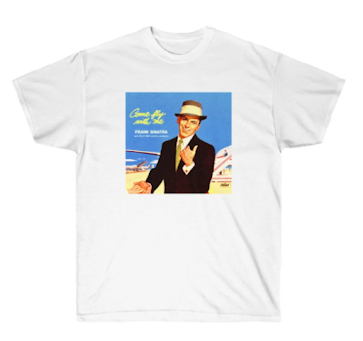
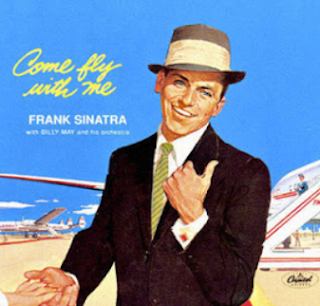
Frank Sinatra - Come Fly with Me


Frank Sinatra 

"COME FLY with ME"


"SINATRA"


SINATRA

"COME FLY with ME


FRANK SINATRA

"COME FLY with ME"


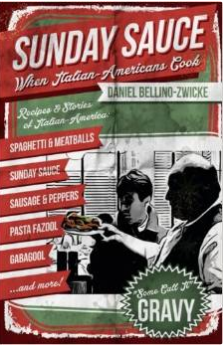
SUNDAY SAUCE

alla SINATRA 


Monday, September 6, 2021

The Rat Pack


FRANK SINATRA -  DEAN MARTIN

And SAMMY DAVIS Jr.


The RAT PACK


FRANK SAMMY & DEAN


SUNDAY SAUCE

alla SINATRA


FRANCIS ALBERT SINATRA


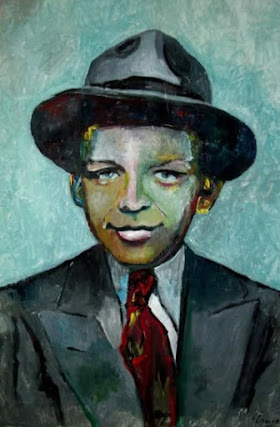
Frank Sinatra - Ol Blue Eyes - Painting


"Ol BLUE EYES"

FRANCIS ALBERT SINATRA


SINATRA


FRANK SINATRA


SUNDAY SAUCE

alla SINATRA

alla BELLINO


LINCOLN CONTINENTAL

1966


by BELLINO


FRANK SINATRA


Monday, June 21, 2021

Sinatra & The Ali Frazier Fight


ALI - FRAZIER

"FIGHT of The CENTURY"

Madison Square Garden

NEW YORK

March 8, 1971


When Joe Frazier met Muhammad Ali at Madison Square Garden on March 8, 1971, the storyline went much deeper than two undefeated heavyweights clashing for the belt. Ali had refused induction in the U.S. Army, was considered radical chic and seemed to embody the culture of the 1960s. Frazier was cast as a champion fighting for the establishment. Frank Sinatra was a ring-side photographer for Life magazine. Barbra Streisand, Sammy Davis Jr., Hugh Hefner, Dustin Hoffman and Diana Ross were ringside. Burt Lancaster was part of the closed circuit broadcast team. All that, and the fight actually lived up to its billing as the "Fight of the Century." After 15 rounds of thrilling toe-to-toe action, Frazier won a unanimous decision.


ALI FRAZIER Fight Poster


FRANK SINATRA at The ALI - FRAZIER Fight

March 1971  MADISON SQUARE GARDEN , New York


Frank Sinatra figures into this story as a boxing fan and amateur photographer – and also, of course, by his own high-powered celebrity (for more on Sinatra see “Sinatra Stories”). The famous singer and Hollywood actor was then known for his 1969 hit song, “My Way,” which had reached the Top 40 in the U.S. and did even better in the U.K. However, by early 1971 he was also talking retirement, possibly by June, after he completed a charity event.
But that March of 1971, Sinatra was keen to get a ringside seat for the Ali-Frazier fight, but few were available. One report had it that he made a deal withLife magazine to do some photography for the magazine at the Ali-Frazier fight, which would give him more or less free license to roam around up close to the action. But in the introduction to Life’s March 16th, 1971 edition reporting on the fight, managing editor Ralph Graves explained in an “editor’s note” column how the magazine came to use both Sinatra and writer Norman Mailer beyond its own reporters and photographers. On Sinatra’s role, contrary to some other stories at the time, here’s how Graves described it:
…For our pictures of the action, we were relying on the magazine pool photographers at ringside, especially Sport’s Illustrated’s Neil Leifer and Tony Triolo, who delivered outstanding pictures. But it never hurts to have a horseshoe in your glove. Six years ago staff writer Tommy Thompson and photographer John Dominis were doing a story on Frank Sinatra. Sinatra was fascinated by Dominis’ equipment and admitted he had been interested in taking pictures for 20 years. Shortly before the fight Tommy learned that Sinatra had wangled himself a ringside seat and was going to take pictures with a battery of cameras. Tommy went to work wangling Sinatra into letting us have a look at his film. We didn’t expect to get anything the professional photographers didn’t have, but it might be worth inspecting. Indeed, Sinatra wound up getting the cover, a memorable full-spread picture [inside the magazine] (yes, he held his camera at that angle on purpose), and two other shots in our story. We are offering him a job…


ALI Dodges a BULLET From JOE FRAZIER


Ali / Frazier

"FIGHT of The CENTURY"


Ali / Frazier


FRANK SINATRA

COVER PHOTO For LIFE MAGAZINE

MARCH 1971


ALI FRAZIER


The FIGHT of THE CENTURY


Muhammad Ali vs. Joe Frazier, billed as the Fight of the Century (also known as The Fight), was the boxing match between WBC/WBA heavyweight champion Joe Frazier (26–0, 23 KOs) and The Ring heavyweight champion Muhammad Ali (31–0, 25 KOs), held on Monday, March 8, 1971, at Madison Square Garden in New York City.It was the first time that two undefeated boxers fought each other for the heavyweight title. Frazier won in 15 rounds via unanimous decision. It was the first of a trilogy, followed by the rematch fights Super Fight II (1974) and Thrilla in Manila (1975), both won by Ali.


On the evening of the match, Madison Square Garden had a circus-like atmosphere, with scores of policemen to control the crowd, outrageously dressed fans, and countless celebrities, from Norman Mailer to Woody Allen. Frank Sinatra, who, after being unable to procure a ringside seat, took photographs for Life magazine instead. Artist LeRoy Neiman painted Ali and Frazier as they fought. Burt Lancaster served as a color commentator for the closed-circuit broadcast. Though Lancaster had never performed as a sports commentator before, he was hired by the fight's promoter, Jerry Perenchio, who was also a friend. The other commentators were play-by-play announcer Don Dunphy and boxing champion Archie Moore. The fight was sold to, and broadcast by closed circuit, to 50 countries in 12 languages via ringside reporters to an audience estimated at 300 million, a record viewership for a television event at that time. Riots broke out at several venues as unresolvable technical issues interrupted the broadcast in several cities in the third round. And, although no live radio coverage of the fight itself was allowed under the terms of the promotion, the Mutual Radio Network did broadcast the fight, the night of March 8th, with announcers Van Patrick and Charles King, together with many other sports commentators, providing round-by-round summaries live as they came out over the UPI and AP wire services.
The referee for the fight was Arthur Mercante, Sr. After the fight, Mercante, a veteran referee of hundreds of fights, said "They both threw some of the best punches I've ever seen."
The fight itself exceeded even its promotional hype and went the full 15-round championship distance. Ali dominated the first three rounds, peppering the shorter Frazier with rapier-like jabs that raised welts on the champion's face. In the closing seconds of round three, Frazier connected with a tremendous hook to Ali's jaw, snapping his head back. Frazier began to dominate in the fourth round, catching Ali with several of his famed left hooks and pinning him against the ropes to deliver tremendous body blows.
Ali was visibly tired after the sixth round, and though he put together some flurries of punches after that round, he was unable to keep the pace he had set in the first third of the fight. At 1 minute and 59 seconds into round eight, following his clean left hook to Ali's right jaw, Frazier grabbed Ali's wrists and swung Ali into the center of the ring; however, Ali immediately grabbed Frazier again until they were once again separated by Mercante.
Frazier caught Ali with a left hook at nine seconds into round 11. A fraction of a second later, slipping on water in Frazier's corner, Ali fell with both gloves and his right knee to the canvas. Mercante stepped between Ali and Frazier, separating them as Ali rose. Mercante wiped Ali's gloves and waved "no knockdown." At 18 seconds into round 11, Mercante signaled the fighters to engage once again. Round 11 wound down with Frazier staggering Ali with a left hook. Ali stumbled and grabbed at Frazier to keep his balance and finally stumbled back first to the ropes before bouncing forward again to Frazier and grabbing on to Frazier until the fighters were separated by Mercante at 2:55 into the round.
Heading into Round 15, Frazier held the thinnest of leads on the judges scorecards (7–6–1, 10–4–0, and 8–6–0); so thin that, were he to lose the final round, he could still win, but only be by a single point. To be sure, Frazier closed convincingly. Early in round 15, Frazier landed a left hook that put Ali on the canvas. Ali, his jaw swollen noticeably, got up at the count of four, and managed to stay on his feet for the rest of the round despite several terrific blows from Frazier. A few minutes later the judges made it official: Frazier had retained the title with a unanimous decision, dealing Ali his first professional loss.


FRAZIER / ALI

by Leroy Neiman


SUNDAY SAUCE

alla SINATRA


.


Monday, April 12, 2021

Sinatra Trivia


"Don't Sit on Sinatra"

Telly Savalas as KOJAK


POP CULTURE TRIVIA


In the December 1974 Kojak episode, Cross Your Heart and Hope to Die, Frank Sinatra is mentioned several times by Greg (George Shannon), the soon-to-be-murdered victim, while in his apartment attempting to seduce his date. He then puts on a Sinatra record but the music is not heard. In an attempt to solve the crime, Kojak (Telly Savalas) mentions Sinatra several more times during the episode. Halfway through the program, he enters the police department holding a copy of Some Nice Things I've Missed and throws the record on a desk as he begins a conversation with others officers. Meanwhile, Sgt. Stavros (Telly's real-life brother George Savalas) sits on the desk without paying attention to what's underneath. Before leaving the office, Kojak turns to Stavros as says "Fatso, you're sittin' on Old Blue Eyes". Unnerved, Stavros picks up the vinyl and hands it over to Kojak before walking out. In the next scene, Kojak arrives at the apartment of Lisa Walden (Andrea Marcovicci), still holding the album, and tells her "I brought you a Frank Sinatra album". Coincidentally, Telly Savalas also recorded a cover of the song "If" (as Sinatra did on this album), which was released as a single only three months later.


SUNDAY SAUCE alla SINATRA

RECIPE by DOLLY SINATRA


.


Frank Sinatra 

"COME FLY with ME"


"SINATRA"


SINATRA

"COME FLY with ME


FRANK SINATRA

"COME FLY with ME"


SUNDAY SAUCE

alla SINATRA